Friday, March 20, 2015

Happy Endings...Not So Happy?

Have you ever read a book that ended TOO happily?

Too many characters survived? Too many relationships ended in hugs and handshakes? Too many catastrophes were easily averted?

I recently finished reading a book whose final five pages neatly did the following:
  • Resolved the love triangle as the protagonist chooses between the two men she's been flip-flopping between for the last three books. The one she doesn't choose is fine with it, just like that.
  • The guy she doesn't choose is immediately asked out on a date by a secondary character. The implication is that they'll live happily ever after.
  • Four or five characters show up randomly (truly, out of nowhere) like "Hey, we're alive!" Despite the fact that there were numerous overwhelming obstacles in their way. This is not really explained.
  • The warring parties (think hundreds, thousands of people) are gonna be just hunky-dory. Forget the angst of the past. Let's sing "Kumbaya" and roast marshmallows everybody.
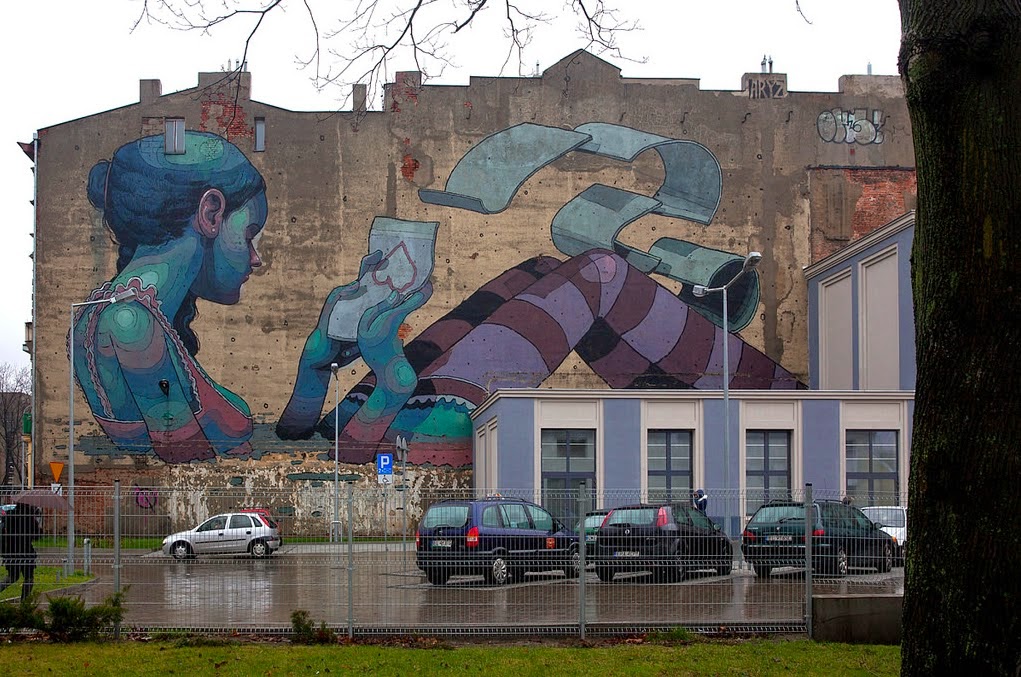
I couldn't handle it. It was such a neat little ribbon, so condensed and sudden, that I simply could not suspend my disbelief. Maybe if these events had happened earlier, sort of scattered throughout. But no. The last five pages.

It's just unrealistic. I'm all for the hero winning at the end, but there needs to be balance in the force (as it were). This book was part of a trilogy that spent three books building up these insurmountable odds. The payoff of a five page, happy-go-lucky wrap up was so unfulfilling.


When you write, you are making promises to your reader all through your work. When you introduce your protagonist to the drop-dead gorgeous boy, you're promising that something is going to happen there. It doesn't have to be a GOOD thing! She could find out he's a total jerk or that he's an alien or that he's a figment of her imagination, but the promise is made that drop-dead gorgeous is going to play a role. When you set up cataclysmic events to thwart your hero, you're promising that IF your hero is going to win, it's going to be in an even more epic way, not by some simple shoulder shrug.

It's all about keeping your promises.

I know I struggle with endings in my own writing. I tend to stop too early and leave readers feeling unfulfilled (sorry!) so I almost always have to go back to my endings and take my time with them.

What books have you read that made good on their promises? What books had superb endings that are worth waiting for (without giving them away, of course)? Any advice for writing awesome endings?

Thursday, March 12, 2015

Quick Tip: Editing #1: Text-to-Voice


Have a text-to-voice program read your work aloud to you. You'll catch things you missed the first time through, or even reading aloud on your own (which is also recommended). The voice will sound strange and electronic at first, but I promise that as you listen, it becomes far less noticeable. Or maybe the machines are learning...


Personally, as an added bonus, I am able listen to my work while I'm AT work this way. I don't do any serious editing there of course, but it helps me stay connected with my story and listen for plot holes along the way. It's also useful as I occasionally hear events that I foreshadowed early on in the book but never actually wrote in later.

Friday, January 30, 2015

3 Steps to Overlording Your Plot Forward

Writing is a lot like being an evil overlord. Your readers are your subjects and you have control over them - you control their emotions, their bedtimes, and their day dreams. You create new crushes and new frenemies for them. So. Much. Power.

Here's the great part about this: you can use your readers to help you BEFORE THEY EVEN EXIST.

Whaaaat?!

That's right. While you are still in the process of writing, you can channel your readers to help drive the plot forward. How? It's as easy as 1-2-3!

1. Know who your readers are. Are you writing for children or adults? Men or women? Adventurers or homebodies? (Caveat: people who are not your "intended audience" will read and love your book. I don't think there are books out there that are exclusively for one group of people and that no one else could enjoy. That is not where we're going here. But having an idea of the target audience is going to help you, not only during your writing time but also when it comes time to query that sucker.)

2. Answer this question: What do my readers want to see next/see more of? Do they want a confrontation between your protagonist and antagonist? Do they want your MC and her crush to end up with some unexected alone time? Do they want to learn more about the diabolical workings of the King? Once you know what your readers want...

3. Give it to them. Or don't. This is the part where you get to play evil overlord (mwa-ha-ha!). Your minions have made their requests and, like God, you can respond in one of three ways: Yes, No, and Wait.

        A. Give them the Yes. You want your readers to enjoy this, afterall. You want them to get their wish of crush-ey alone time. Give it to them...sometimes.

        B. Give them the No. Have you ever wanted to throw a book through the window out of frustration or cried when a favorite character died? Sometimes aswering with "No" is the best way to evoke personal response from your readers and get them truly invested. Afterall, in a world of "yeses," where would the story be?

        C. Tell them to Wait. Your MC is going to end up with Crushey-Mc-Crusherson. But not now. This is where you get to build suspense and tension, and your plot will grow for it.

So there it is, Friends. Three easy steps to Overlord your plot forward. If you're ever stuck, try using this process. Better yet? Keep a list of things you think your readers want and plan out what their answers will be (Yes, No, or Wait). You might get some new devilish plot ideas while you're at it!

Happy writing!

Currently Reading: Enders by Lissa Price
Currently Listening To: Alias Soundtrack, Season 1

Saturday, January 24, 2015

The Online Writing Community Acronym Dictionary

There is a beautiful online writing community that I have recently found and am quickly falling in love with. It is amazing to connect to other writers, editors, and book lovers! I have been visiting blogs, vlogs, and twitter feeds just basking in all the great information and support that is available. But there is a bit of a secret language going on in these places, so I decided to create a dictionary to help out any other newbies like me who may feel a little lost.

General Terms:

ARC: Advance Reader Copy. This is when readers get their grubby little mitts on a book before it's officially released (the lucky ducks!)

CNR: Closed No Response (I have also heard people call this: Closed No Rejection?). This is a term used during querying when an agent doesn't respond to your query at all and you decide to close out the "open" status on the query knowing they will likely never respond.

CP: Critique Partners. These are the people who help make your rough work into awesome work and kindly point out which darlings need slaying. And vice versa, because turn about is fair play.

ER: Email rejection. When an agent emails a rejection to your query. (Be strong!)

EQ: Email query. When you sent a query via email to an agent, then crossed your fingers, toes and eyes and prayed for a good response.

FR: Full request. When an agent you queried requests to read your full manuscript (Congratulations!)

MC: Main Character

MS: Manuscript

POV: Point of View. The point of view your story is written from

PR: Partial Request. When an agent you queried requests to read a portion of your manuscript (congratulations! Here's hoping for an upgrade to a full after the partial!)

QT: Querytracker.com. If you are planning to query agents, ever, visit this website. You can read up on the agents, hear other author's experiences, and (you guessed it!) track the status of your own queries.

WIP: Work in progress. This is whatever project you are current working on (aka: your baby)


Age Ranges:

A: Adult
MG: Middle Grade
NA: New Adult
YA: Young Adult

Genres:

CB: Chapter Book
NF: Non-fiction
PB: Picture Book
R: Romance
SFF: SciFi (Science Fiction)/Fantasy
UF: Urban Fantasy


I'm sure this isn't exhaustive, but I hope it is helpful! Let me know what I missed...perhaps a part two will be in order!

Happy writing!

Currently Reading: Enders by Lissa Price
Currently Listening to: House Carpenter by Nickel Creek

Thursday, January 15, 2015

My 2015 Resolutions (No, they're not late.)

I never was big on New Years' resolutions. They always felt disingenuous
to me. What I do like is making resolutions on my birthday. It's more personal. It means something to me. And, friends, yesterday was that day.

So here we go: 

Resolution #1: Finish my first draft and first edit of Silver Gray [the title's going to change]. 

This is a rewrite of the first book I ever finished. The initial draft was over 200,000 words long.

Let me give you a little perspective: the average young adult book (like this one) is 55,000-70,000ish words long. We're talking something that's three times the average...and I guarantee you most of those 200,000 words are completely unnecessary. Hence: rewrite.

In fact, I'm keeping very little of the original, even down to plot. Many of the characters are sticking around though. (I spent 200,000 words getting to know them. I can't let them go now.) So even though I'm calling it a rewrite, it's more like a brand new creation.

Resolution #2: Have an idea ready to go for book #4 
Once I finish the first draft of Silver Gray, I'll need some time before I can look at it objectively enough to edit. I don't want to waste my time during the cooling phase, so I'm going to get my idea tank filled up for the next project. I have a file on my computer full of ideas already. Maybe I'll flesh out one of those, maybe I'll come up with something new. Who knows? Such wonderfully free possibilities. This resolution will probably result in me watching a lot of great documentaries (one of my favorite sources for inspiration).

Resolution #3: Secrets secrets! I can't share this one publicly (yet) but I will when the time is right.

25 years old. A quarter of a century. I plan to make it a good year.


Who doesn't love a good dragon selfie?


Wednesday, December 10, 2014

Permission for Blank Space in Your Writing

We've all done it. You're writing along, happy as a lark, when suddenly you hit a detail that brings you to a shrieking halt. It could be anything - I need the name of a small city in Italy! I need to know how to escape handcuffs! I need to know who the Prime Minister was in 1963! - and all of a sudden instead of writing, you are sucked into the vortex that is Google.

Don't do it!

I know, it's tempting. I know, "it will only take two minutes," but if you are on a roll, keep writing. Because if you stop to find the name of that charming Italian city, you will never get back to the great scene you've cooked up to happen there. Write the scene, then go back and add in the details.

I recognize that there are some plot points you MUST research before you can write. That's okay. Research. Research your little heart out. Not only is it something you can do, it is something you should do. But research on research time.

The last few chapters of the most recent book I finished was rife with sentences along these lines...
After MC arrived in TOWN, X miles North(?) of where she had been, she realized she had even further to go. But the taxi ride onward would cost at least XX dollars(? find currency of this country?) and she had only XX in her pocket after the last trip.

No, that is not a REAL sentence from what I was writing (Yikes. No.). But you get the idea. Sure, I could have taken the time to find the town, the distances, the monetary amounts, but I could easily continue writing without those details, so that's what I did. The details can be filled in later during times you have set aside for editing or researching, but not during the time you are trying to write.

Give yourself permission to leave blanks and question marks. I promise, once you finish that first draft, going in to fix them is a piece of cake. (Not to mention a wonderful way to make you feel like you're taking leaps and bounds in the editing process. Always a win.)

Thursday, December 4, 2014

NaNoWriMo 2014


This year was my first time attempting (and winning!) NaNoWriMo. For those who don't know, NaNoWriMo is short for National Novel Writing Month. It is an event where writers from around the world attempt to write an entire novel (or at least 50,000 words of one) between 12:01am on November 1 and 11:59pm on November 30. No small feat, especially considering many of those writers are juggling full-time jobs, school, kids, etc. then you throw Thanksgiving in there just to keep things interesting.

There's actually a bit of debate about the benefit of an event like NaNoWriMo. Some argue that it gives people "permission" to stop writing the rest of the year. Some argue that anything produced during NaNo is absolute rubbish so the exercise is useless. Others argue that NaNo gets new people interested in writing, that it brings community to the otherwise solitary activity and that it forces people to turn off their "inner-editors" and just get words down on paper.

Now that I've done it myself, I feel I can legitimately present my opinion on the matter. So, here are a few thoughts on my NaNo experience...

1) A lot of what is produced is truly rubbish.
Really truly. When you are writing just trying to get your 1,667 words in for the day (the amount needed to finish on time), sometimes you just aren't "feeling it." And it shows. When this happens to me my writing becomes a seven-year-old's retelling of the school day. "And then, and then, and then..." Sometimes you lose track of your plot but keep writing "because 1,667 words" and your character's names have changed because you forgot them and they're not doing anything at all related to what's supposed to be going on and your dialogue is stilted and your descriptions are mundane and you know what? That's okay. Even when you aren't doing NaNo a lot of what you writing in draft #1 is rubbish, so why not just get it over with in one fell swoop. It's like ripping off a band-aid. Just get it over with.

2) Writing during November means nothing if you're not going to write in December (and January through October too).
"Saving up" all your creativity and writing time for November would be like training for a marathon once a year instead of everyday. It just doesn't work that way. If you're going to put the effort into doing Nano, you'd better be prepared to put in the effort the rest of the time as well.

3) Nano did virtually nothing for my "community" feel.
This is mostly my fault. I could have done the online write-ins. I could have connected with more Nanoers on Twitter. Heck, I could have gone to the real life meetings in the Twin Cities. But I didn't. I'm not sure if it would have helped or hurt honestly. However, it was nice to know that on those days when 1,667 words seemed impossible I knew there were others out there feeling my pain or celebrating with me when I topped 3,000 in one sitting. That was nice.

4) Nano gets words on paper.
Or rather, participating in Nano gets words on paper. I can guarantee you that I would not have written anywhere near 50,000 words in November if I hadn't participated in Nano. That alone makes it worth it because even if no one else ever reads what I wrote, I wrote. I practiced. I trained. And one day I'll finish my marathon and I know that Nano will have been just one more training exercise that helped me get there.